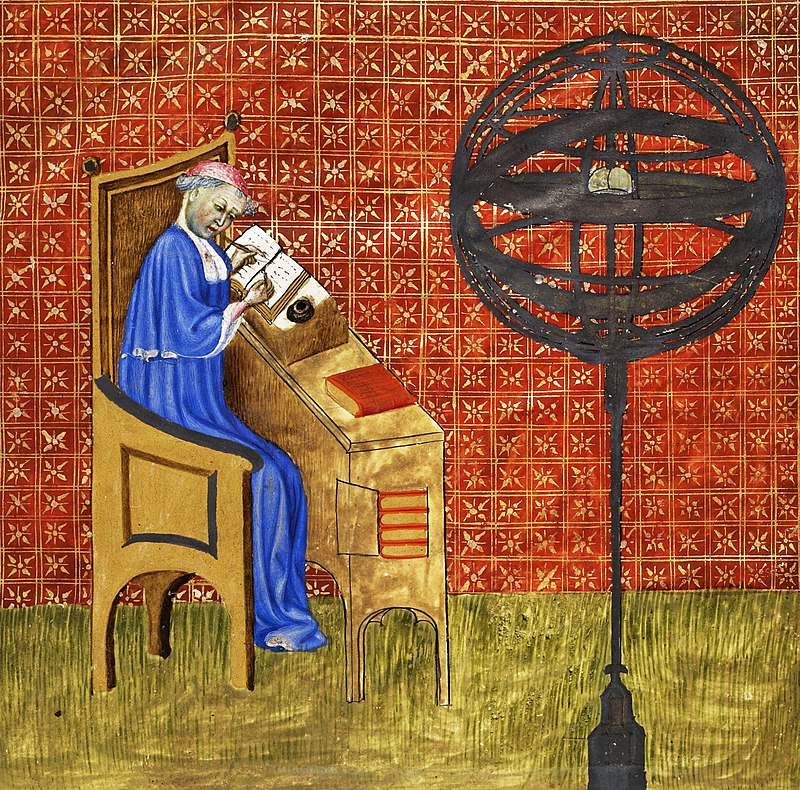
Portrait of Nicole Oresme from c. 1325 (image credit: Wikimedia Commons)
Some early astronomers realized that there was another way to explain the motions of the stars: perhaps the Celestial Sphere was motionless and the Earth turned from west to east. Aristarchus of Samos (3rd century BC) suggested that it was the Earth, and not the Celestial Sphere, that rotated, but astronomers in Europe and the Middle East rejected this idea. In the 14th century Nicole Oresme (below) pointed out that there was no observational difference between a rotating Earth and a rotating Celestial Sphere, but ultimately he concluded that the Earth was stationary.
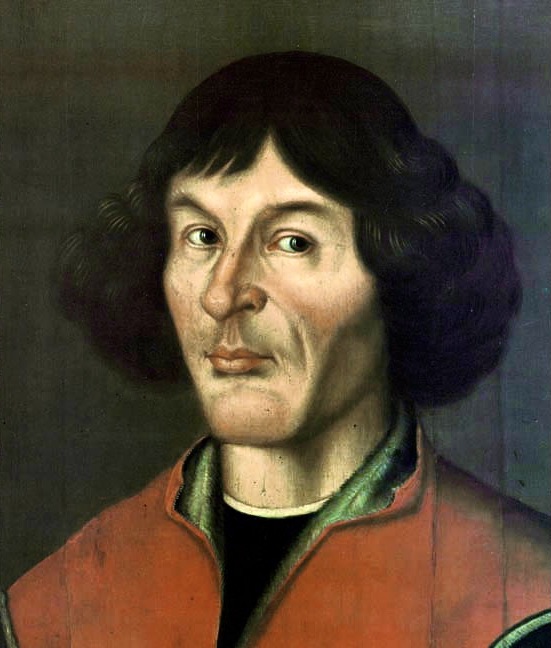
It was not until Nicolaus Copernicus (below) published his famous De Revolutionibus in 1543 that the idea of a rotating Earth began to be taken seriously. Although most astronomers continued to reject the idea of a moving Earth, a few astronomers came to believe that the Earth did indeed rotate and the Earth's rotation became a subject of much debate in the century after Copernicus' death.