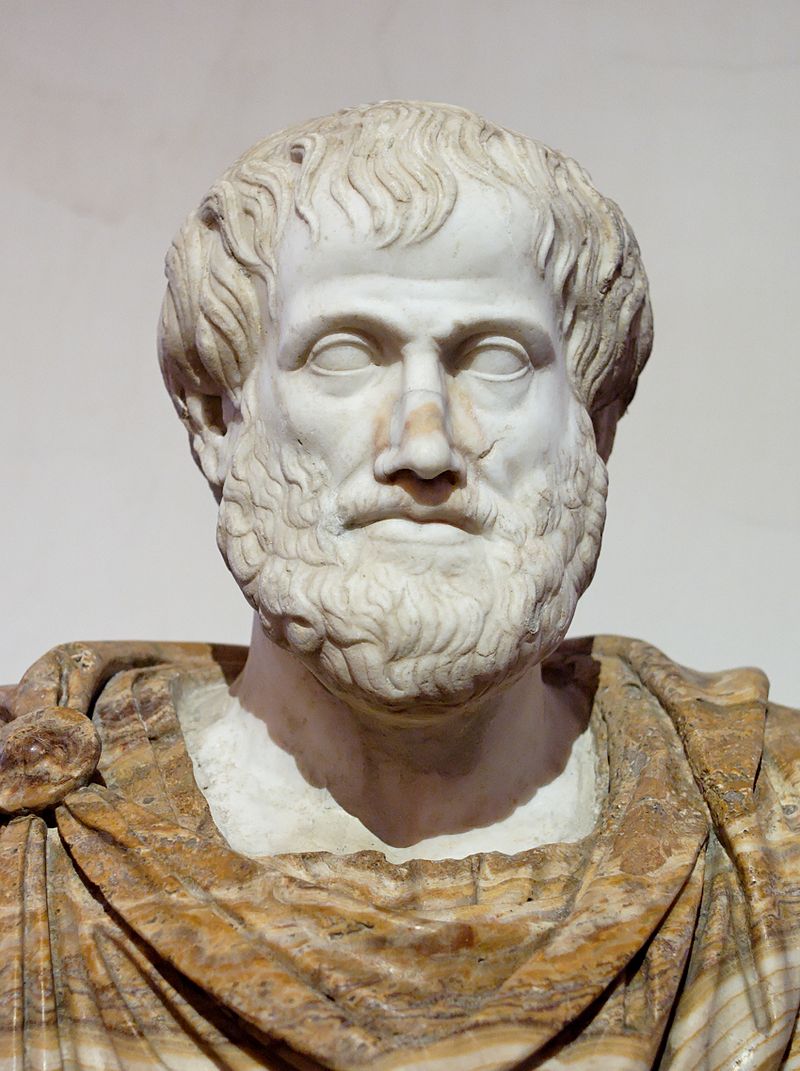
Aristotle (image credit: Wikimedia Commons)
If you watch the stars at night for a long time you will notice that they all seem to circle counterclockwise around the star Polaris (also called the North Star). But the view looks different from different locations. For example, as you move southward Polaris will gradually move down toward the horizon and some new stars will become visible above the southern horizon.
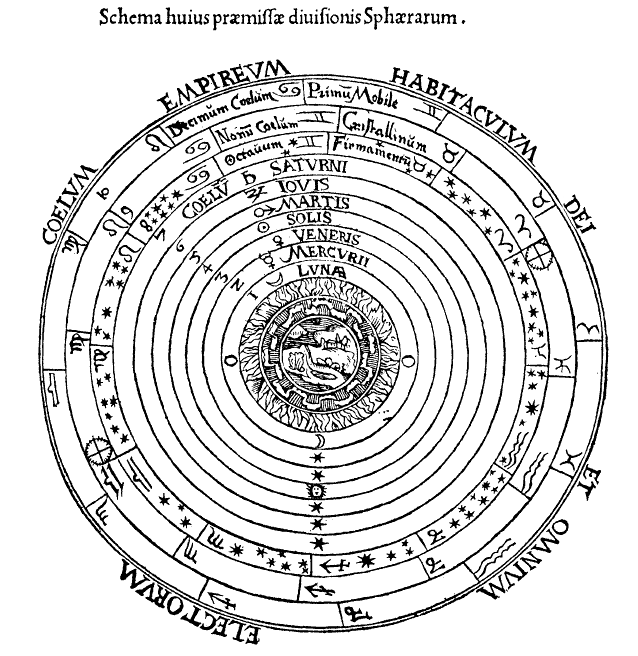
By the 4th century BC, Ancient Greek philosophers like Aristotle (above) had developed a scientific model that could explain the changing appearance of the stars. This model consisted of a stationary, spherical Earth surrounded by a rotating Celestial Sphere that carried the stars around from east to west once every 23 hours and 56 minutes (a so-called "sidereal day"). This model is illustrated in a diagram from the 15th century shown below. (Note that additional spheres were included to account for the apparent motions of the Sun, Moon, and five visible planets, but here we will focus only on the stars.) The ancient Greek Two-Sphere Model was incredibly successful at explaining and predicting the apparent motion of the stars.